
AI would never smoke a cigarette with you.

What's the play
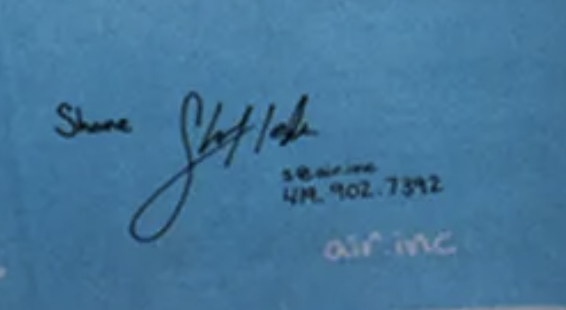
Write your company's core belief with a catchy hook "Ai would never smoke a cigarettewith you" by hand and put it in the New York times. Slap your CEOs personal cell number at the bottom to let people have a direct line. It humanizes the brand and speaks directly to your core persona of people who believe AI shouldn't replace humans. Air's CEO Shane Hegde did exactly this on March 22, 2026, arguing that AI will never replace creative professionals, a position thats a bit surprising for a founder who'd raised $70M to build AI tools for creative teams. The letter ran the same week Air launched its biggest product yet.
What was the alternative?
A press release, a blog post, or a LinkedIn essay that says roughly the same thing and gets buried in the feed by Tuesday.
Results / what moved
3x
years of triple-digit growth attributed to creative marketing over standard SaaS channels
The letter got picked up by Ad Age, Mediabistro, It's Nice That, and others. Hegde said organic social and campaigns like this helped Air grow triple digits and move upmarket over the prior three years, though no direct attribution number was tied to this specific letter. His cell number was still live and getting calls weeks later.
Cost breakdown
Full-page Sunday New York Times ad rates run roughly $150K-$200K.
Time to pull off
Hegde said it took longer than he'd like to admit to get the letter right. Plan for several weeks of writing and editing, plus standard NYT ad lead time.
Would you run it again?
A handwritten letter with a personal cell number, is a one-time move. You can't run it twice.
Steps
- 1
Find the belief that costs you something to say
Air's letter worked because Hegde was a $70M AI founder arguing AI won't replace creatives. The tension is the whole thing. If your position doesn't make some people in your own company uncomfortable, it's not the right one.
- 2
Write it by hand
Not as a gimmick. The handwriting signals that a person wrote this, not a comms team. It also forces you to be concise because you're not going to rewrite a full page five times. Draft it typed, then write the final version by hand once you're sure.
- 3
Put something real at the bottom
Hegde listed his personal cell number and invited anyone who disagreed to call. A real email address works too. The point is that the letter has to be from a person who can be reached, not a brand that can't.
- 4
Buy the placement that matches the claim
The New York Times Sunday edition is expensive and it's also the place where people still read long-form arguments. Match the medium to the seriousness of what you're saying. A LinkedIn post with the same text is a different object entirely.
- 5
Tie it to a launch
Air ran the letter the same week they launched their biggest product. The letter explains the why; the product is the what. Without the launch, it's just a manifesto. Without the letter, the launch is just another press release.
Receipts
 The original letter on Air's site
 Mediabistro interview with Shane Hegde
Comments
Sign in to join the conversation.