
Fake job hop on April Fools



What's the play
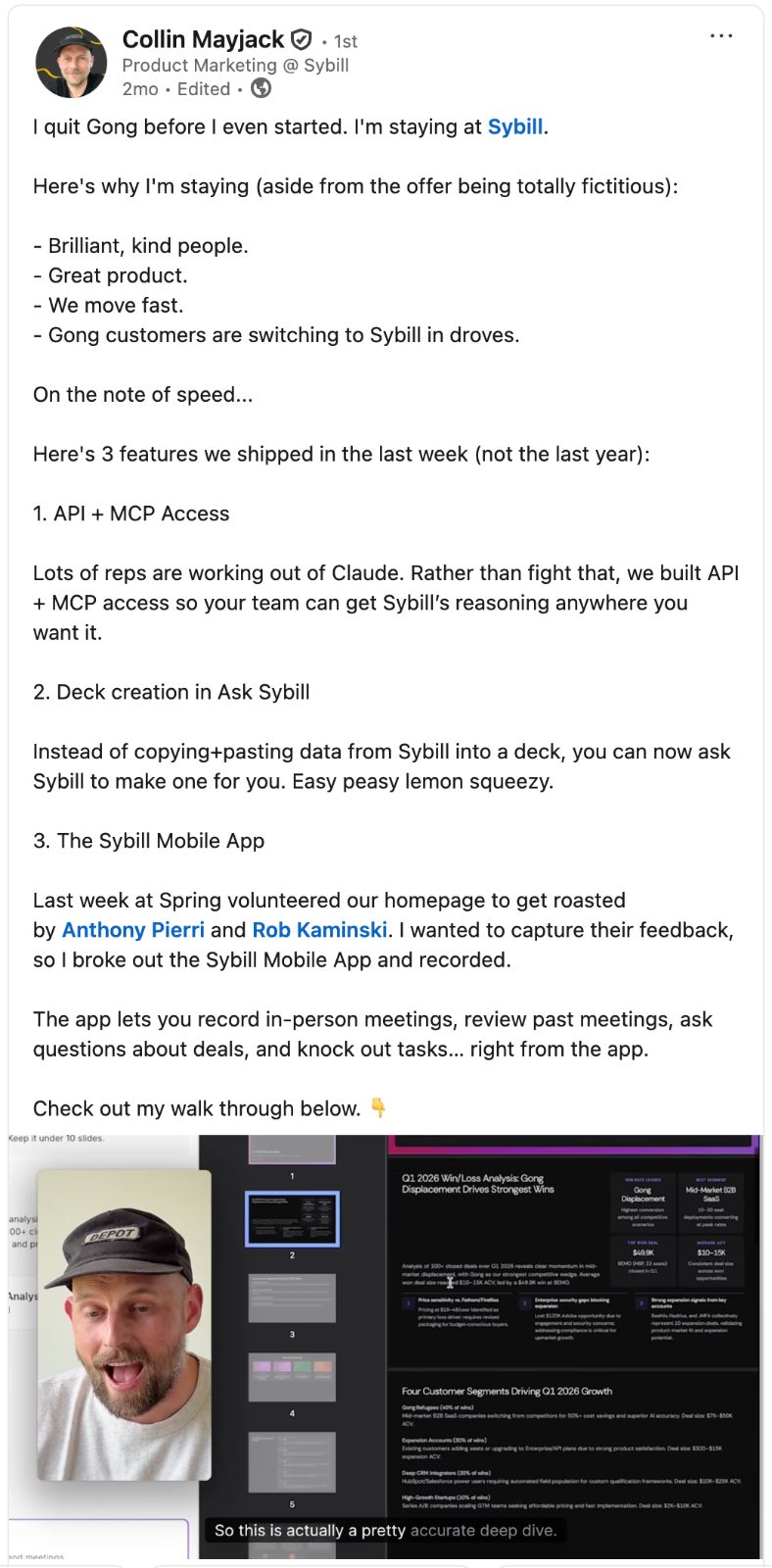
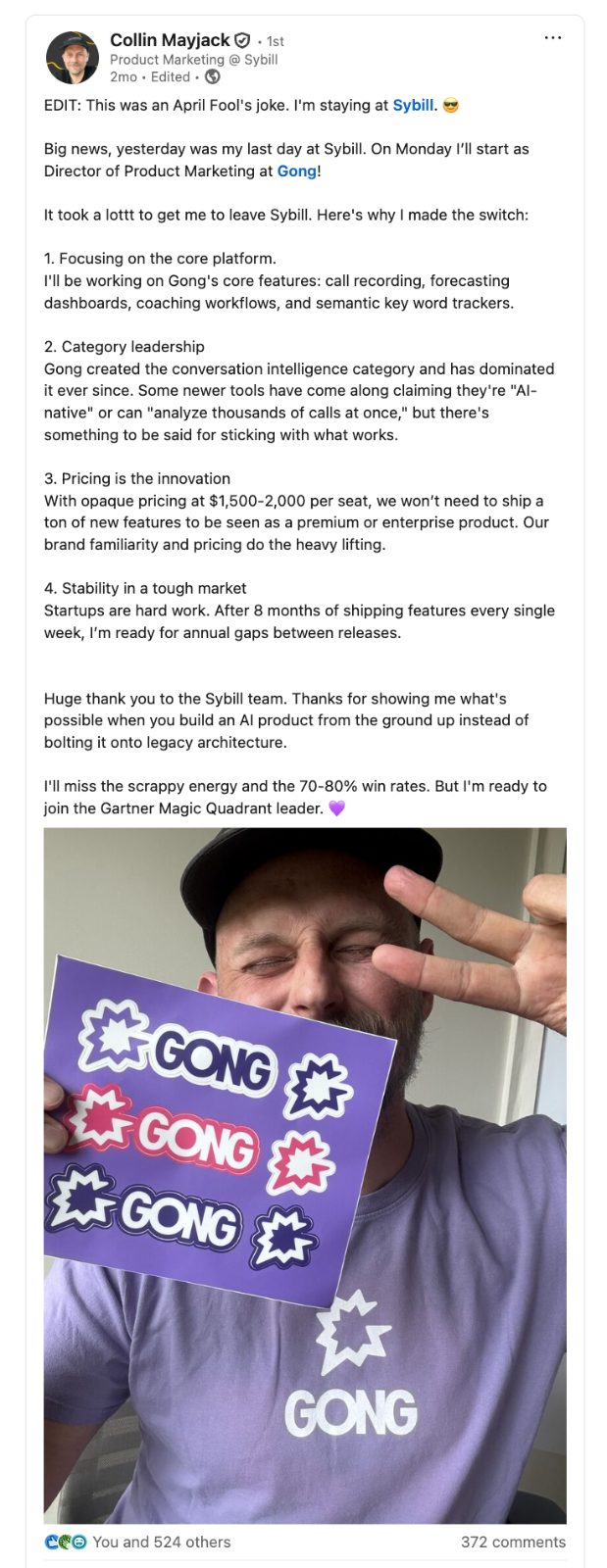
Collin Mayjack posted a straight-faced LinkedIn announcement saying he was leaving Sybill to join Gong, then used the whole post to roast Gong's opaque pricing, slow release cadence, and tired category-leader positioning. The next day Collin revealed it was an April Fools bit and turned the reveal into a promotion for their Sybill vs Gong demo event. The post
What was the alternative?
A boring product update post listing three features that nobody scrolls down to read.
Results / what moved
50k
impressions
525
likes
372
comments
The fake announcement caught everyone off guard, the comments turned into a roast thread, and the next-day reveal landed the real product story. 50k impressions, 525 likes, 372 comments off a single organic post.
Cost breakdown
Basically free. Just the time to write it.
Time to pull off
A day or two
Would you run it again?
Yes. The comments did the selling.
Steps
- 1
Write the fake announcement
Draft a straight-faced LinkedIn post announcing a move to the competitor, formatted exactly like every real job-change post people scroll past.
- 2
Hide the roast in the reasons
Fill the why-I-switched list with believable-but-pointed digs at the competitor: opaque pricing, slow release cadence, brand coasting on category leadership.
- 3
Ship it on April 1
Post it on April Fools so the reveal has a built-in excuse, then let the confusion and comments build.
- 4
Reveal the next day
Post the follow-up admitting the offer was fictitious, keep the tone warm, thank the team, and pivot straight into the features actually shipped that week.
Notes
The bit only works if the satire reads as believable corporate-speak before the punchline hits. Collin named the real competitor and kept the digs specific (pricing, release cadence, the AI-native jabs) so people who knew the space caught it. The risk is reading mean instead of funny, so the follow-up stayed warm, thanked the team, and pivoted hard into actual shipped features. Lead with the joke, close with the proof.
Tools & resources used
 Linkedin
Comments
Sign in to join the conversation.