
Vibe coding an app while running a marathon

What's the play
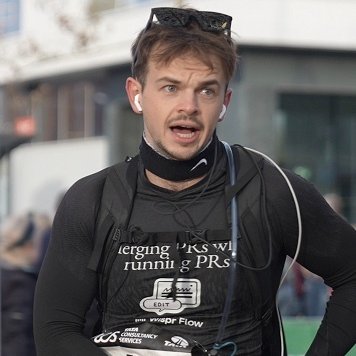
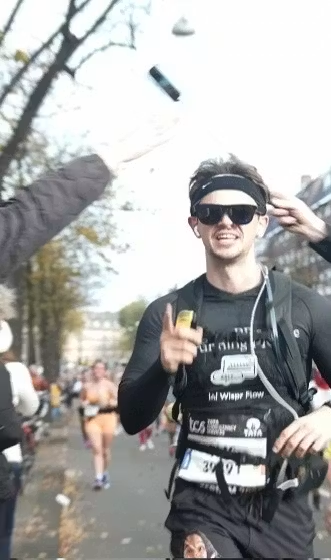
You strap a MacBook to your back, wire AR glasses to your face, and code by voice for 42 kilometers in front of thousands of people. Tijs Nieuwboer did exactly that at the Amsterdam Marathon, using Wispr Flow to dictate code mid-stride and finishing with a working app called Hypes by the time he crossed the line.
What was the alternative?
A product launch blog post or a demo video shot at a desk.
Results / what moved
1
working app shipped mid-marathon
1
national TV interview earned post-race
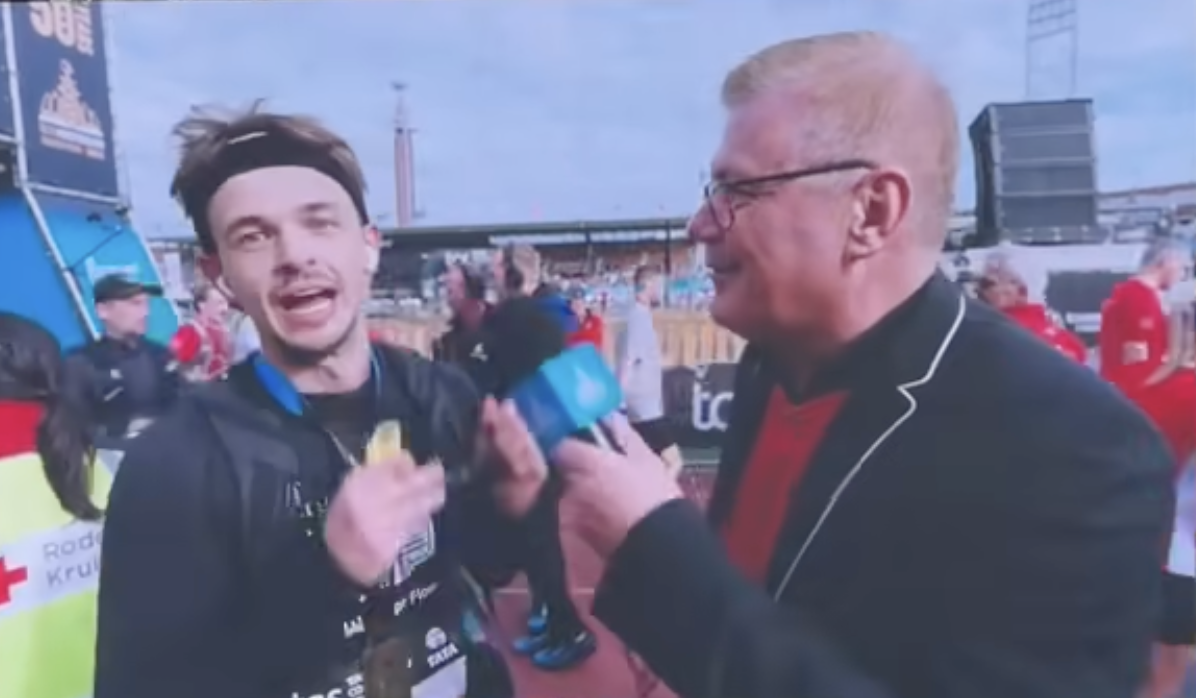
Tijs finished the marathon and shipped a functional app. He was interviewed on national TV in the Netherlands about the run, the app, and the voice-coding setup. No clean download or revenue number in the source, but the story landed on national broadcast unprompted.
Cost breakdown
AR glasses (one pair broke before race week, forcing a last-minute replacement), a Nintendo Switch controller, Enjoyable software, and Wispr Flow. No total figure given in the source.
Time to pull off
Weeks of testing leading up to race day, plus one, 5hr, 42-kilometer race
Would you run it again?
One-time stunt by design. The value was in the proof-of-concept, not the repeatability. Hard to top national TV coverage as a first run.
Steps
- 1
Find a public, high-stakes physical event
Pick something with a crowd, a camera crew opportunity, and a finish line. The constraint is the story. A marathon works because everyone understands what 42 kilometers costs.
- 2
Solve the hardware problem
Test every piece of the rig weeks out. Tijs went through multiple AR glasses before finding a pair with built-in stabilization that didn't bounce unreadably with every stride. The pair he planned to use broke the week before the race. Order backups.
- 3
Map one-handed controls before you need them
A PlayStation controller needs two hands. A Nintendo Switch Joy-Con fits in one. Use Enjoyable (or equivalent) to map buttons to cursor, zoom, and whatever fallback you need when your voice gets too breathless to dictate cleanly.
- 4
Accept that it will break and plan your recovery
Tijs lost his laptop connection within the first kilometer. He opened his backpack mid-stride, reconnected, and kept moving. Know in advance which failures you can recover from on the run and which ones end the attempt.
- 5
Have a camera crew, but brief them on meeting points
Tijs was directing his crew between coding sprints. They missed multiple spots. Lock the meeting points before the gun goes off, not during kilometer 18.
- 6
Ship something real, not a demo
Hypes was a voice-based accountability app that responded to his goal in real time by kilometer 35. A fake build would have killed the story. The app has to actually work, even if only a fraction of the features are live at the finish line.
Tools & resources used
 Wisprflow
 Cursor
 Github
Receipts
 Tijs LinkedIn post
Comments
Sign in to join the conversation.