8 OOH Advertising Examples (From $8 to $375K) (2026)
 Isaac WareUpdated August 6, 20267 min read
What counts as out-of-home advertising here?
Out-of-home is any ad that lives in physical public space. Billboards, transit, wallscapes, and street-level stunts all count. If you want the full definition, it's over in out-of-home advertising. For this piece, forget the format. A rented billboard and a piece of sidewalk chalk are the same category. The only question that matters is whether someone stops and shares it.
8 OOH advertising examples worth stealing
Here they are with the receipts. Skim the table, then read the breakdowns.
| Example | Company | What they did | Cost | Result |
|---|---|---|---|---|
| Double-meaning billboards | Airlearn | Put innocent foreign words that sound like English swear words on NYC billboards | A short billboard run in a major city | 25M views in 10 days |
| Honest Times Square billboard | Cluely | Wrote a plain white board like a text message | ~$375k for four weeks across eight boards | Traffic 4x overnight, then a $15M Series A [SOURCE?] |
| Fake-business car wraps | Slate | Re-wrapped a prototype daily as a different fake business | A prototype and a fresh vinyl wrap each day | 100,000+ reservations by mid-May |
| Wreck-a-car launch | Ramp | Wallscape, billboards, wrecking ball, a smashed car, all built to be filmed | Undisclosed | 73% higher click-through, 3x its best launch |
| Lemonade stand | PostHog | Free lemonade plus early access, with a "when life gives you lemons" bus ad | Lemonade, a couple days on the street, a bus ad | LinkedIn buzz way past the sidewalk |
| Wheatpasting campaign | uglyGTM | Wheatpaste posters for an event, local pasters and a real gig-poster artist | $3,500 all in | Built the vibe, thin on direct signups |
| Sidewalk chalk logos | Kapwing | Chalked its logo across high-traffic SF at night | A few boxes of chalk | Free ad space where nobody scrubs |
Airlearn's double-meaning billboards
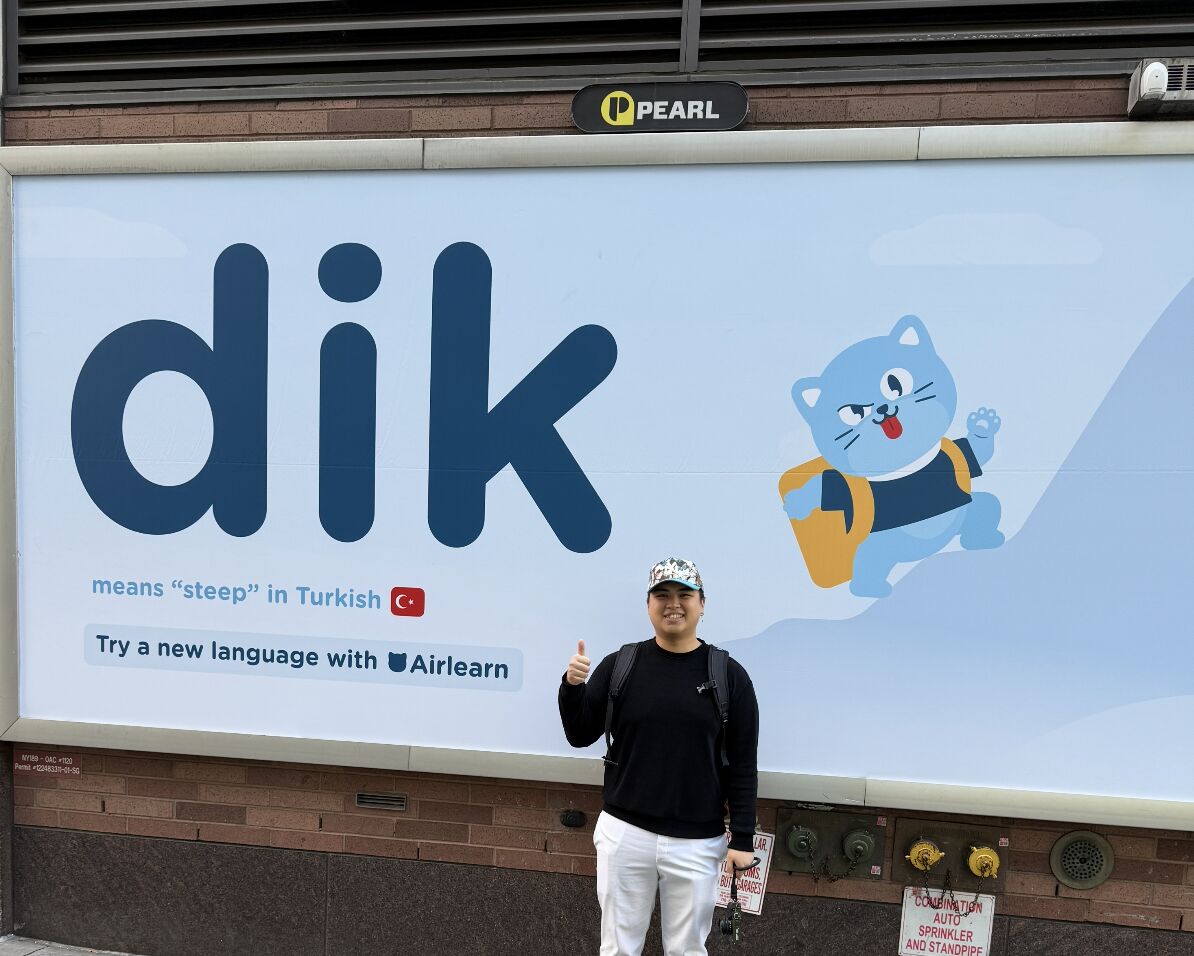
Airlearn bought billboards with innocent foreign words that happen to sound like English swear words. The first US run put "Pussi," Finnish for bag, and "Kock," Swedish for chef, up on NYC billboards. People stopped, laughed, took a photo, and posted it. Ten days later the thing had passed 25 million views [SOURCE?], with Reddit, Facebook, and LinkedIn carrying the placements way past the street corner. The billboard stopped being an ad and became content. That's the whole trick.
Cluely's brutally honest Times Square billboard
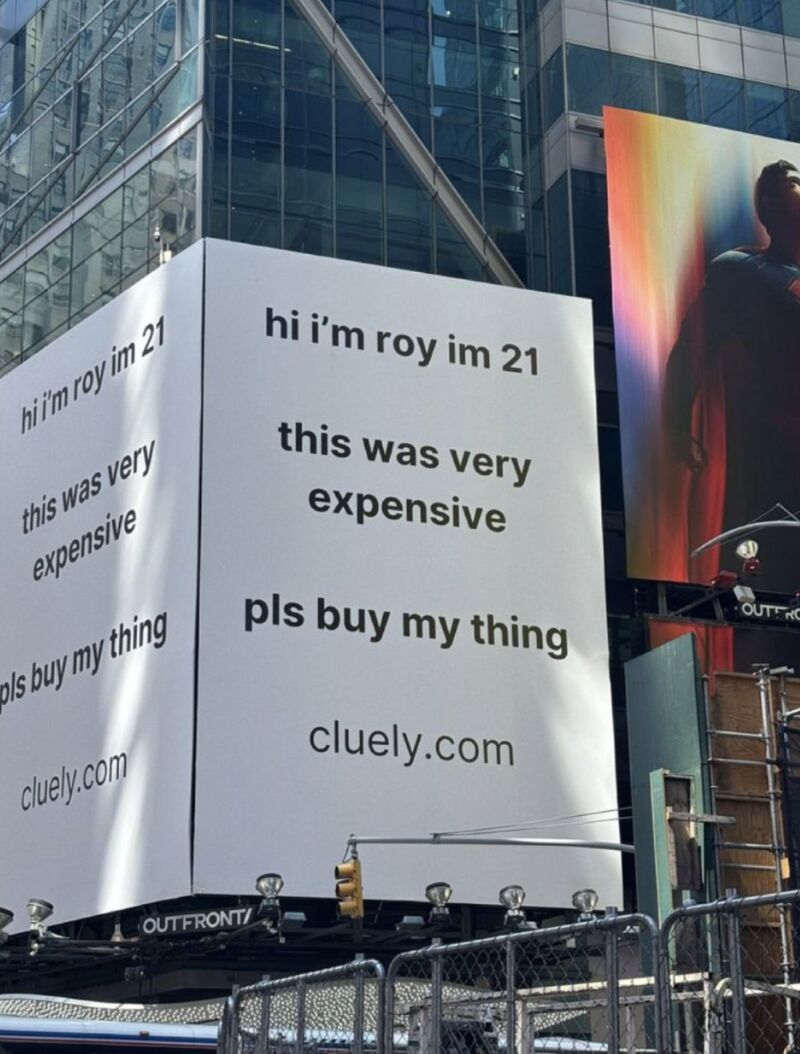
Cluely rented a plain white board in Times Square and wrote it like a text message. Real name, real age, an open admission that the thing was expensive, and a flat ask to go buy it. Traffic quadrupled overnight. The board turned into a meme, with TikToks and Twitter parodies doing the ad's job for free, and Cluely later raised a $15M Series A [SOURCE?]. It wasn't cheap, about $375k for four weeks across eight boards, but it worked because it acted cheap and sounded like a person.
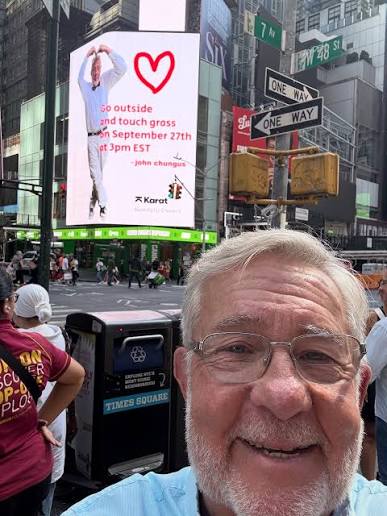
Anthony Po & Karat's 'touch grass' billboard
Anthpo is known for his crazy stunts, even when he doesn't have a budget. With his touch grass billboard people got to see what he can pull off with a few grand. Launching it with "John Chungus" an instagram creator focused on pulling people into the real world, he gave Karat's billboard a light hearted feel-good-vibe and tied it to one of their touch grass events in Central Park. It was a masterclass in brand, events, and OOH.
Ramp wrecked a car to launch a product
Ramp skipped the plain billboard nobody photographs and built a stunt made to be filmed. A painted wallscape in NYC, vinyl billboards, a branded wrecking ball, and a smashed car, all shot for LinkedIn, X, and Instagram. Ramp saw 59% higher LinkedIn engagement than its old campaigns and 73% higher click-through. The video pulled 67,000+ views and 200+ organic reshares, roughly 3x its best launch before it.
PostHog's lemonade stand
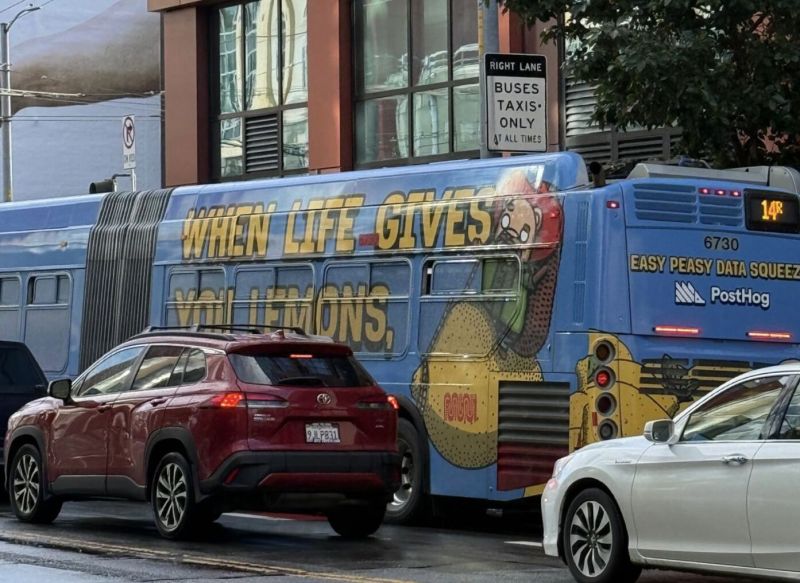
PostHog set up a lemonade stand in San Francisco and handed out free drinks with early access to PostHog Code. You could grab a lemonade, preview what the team was building, and leave with an invite. They tied a bus ad to it running "when life gives you lemons." It carried on LinkedIn too, with people outside the company posting about the stand and tagging the team, so the reach ran well past whoever walked up thirsty.
UserGems wheatpasting campaign
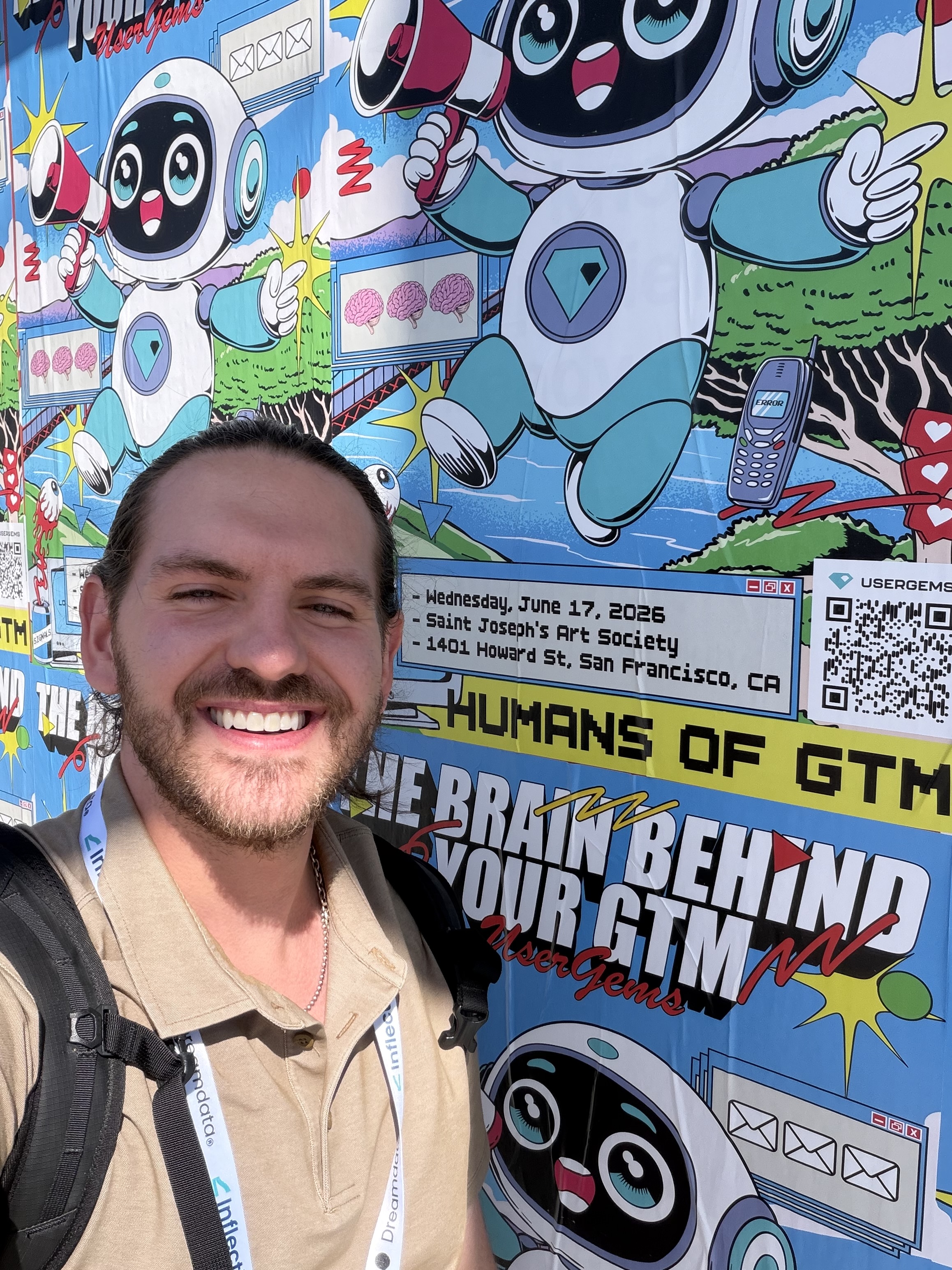
UserGems ran a wheatpaste campaign for an event, using two local pasters they found on Reddit and real art from a gig-poster artist, not AI slop. The posters didn't pull many direct signups. What they did was set the vibe across the whole campaign and make the event feel like something worth showing up to. Total spend was $3,500.
Kapwing chalked its logo across SF
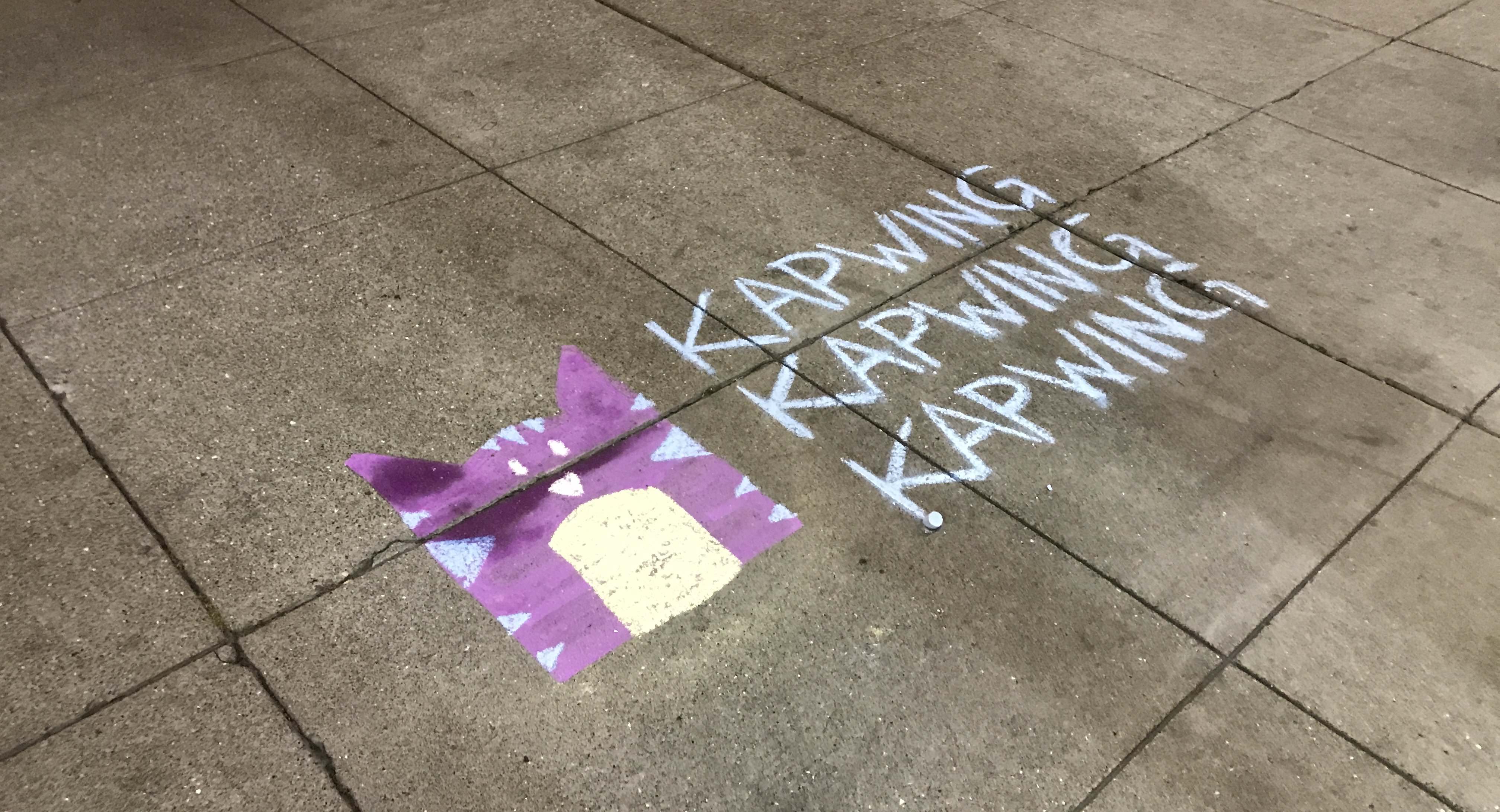
Kapwing grabbed boxes of sidewalk chalk and drew its logo across high-traffic SF at night. Cost was basically nothing, and the sidewalk became free ad space. The drawings washed off in a day on busy stretches like the Embarcadero and Market Street, while the ones in quieter spots like South Park and Potrero Hill hung around. If you try it, skip the busy pavement and go where foot traffic is steady but the scrubbing isn't.
Why does the cheap OOH keep beating the expensive OOH?
Look at the price tags. The chalk cost a few boxes. The wrap cost vinyl. Even the one real splurge, Cluely's $375k board, only landed because it acted cheap and wrote like a person. If you want more of these, the guerrilla marketing roundup is full of them. Money buys reach. It can't buy the idea that makes someone stop and repost. The polished expensive board disappears because it looks like every other ad. The weird cheap one gets photographed because it looks like a human made it. Out-of-home turns into content the second the idea is strange enough that people distribute it for you.
So which OOH example should you actually steal?
Start with the chalk or the wheatpaste. They cost almost nothing and they tell you whether the idea is any good before you spend real money. If it only works after you rent eight Times Square boards, the idea might be the problem, not the budget. The cheapest test on this list teaches you the most. Pick the play that fits what you're launching, keep the production ugly, and sink the money into the idea instead of the placement.
If you steal one, steal this
If you steal one, steal Kapwing's sidewalk chalk. A few boxes and one late night turned San Francisco pavement into free ad space, and it's the cheapest way to find out whether your idea is any good before you ever rent a billboard. Out-of-home rewards the strange idea.
FAQ
- What is out-of-home (OOH) advertising?
- Out-of-home advertising is any message placed in physical public space: billboards, transit ads, wallscapes, and street-level stunts like chalk or wheatpaste. It catches people while they're out in the world instead of on a screen they can scroll past.
- Does OOH advertising work for B2B?
- Yes. Ramp pulled 73% higher click-through and 3x the views of its best prior launch off a filmed wrecking-ball stunt, and PostHog turned a lemonade stand into LinkedIn reach well past the sidewalk. B2B buyers are people, and people share the stuff that makes them laugh.
- How much does an OOH campaign cost?
- Anywhere from pocket change to a lot. Kapwing's chalk was a few boxes, uglyGTM's wheatpaste run was $3,500 all in, and Cluely's Times Square board ran about $375k for four weeks. Per dollar, the cheap ones usually win.
- What makes an OOH ad go viral?
- It becomes content instead of an ad. Airlearn's double-meaning billboards cleared 25 million views because the joke made people stop, photograph it, and repost it. The placement has to give people a reason to do the distribution for you.
- Is guerrilla OOH like sidewalk chalk even legal?
- Depends on the city and the surface, and some of these live in a gray area. Kapwing's chalk washed off in a day, which is part of why it was low risk. Check your local rules before you paste or paint anything that sticks around.
Keep reading
8 Unconventional Account Based Marketing Real Examples (2026)
Eight ABM plays that aren't the same repeated playbook, from a $5,280 Masters swag purchase that returned 40x to a comic book that won a fortune 50 company.
9 guerrilla marketing examples that aren't boring
Nine B2B guerrilla plays with real numbers, from a toilet that pulled 40 million views to a sharpie sign that pulled 578 people.