
Dimensional mail
Also called: Lumpy mail, 3D mailers, Box mailers
Dimensional mail is direct mail with physical depth, sent as a box or object rather than a flat envelope, used in B2B because a package creates a question a letter does not.
What is Dimensional mail?
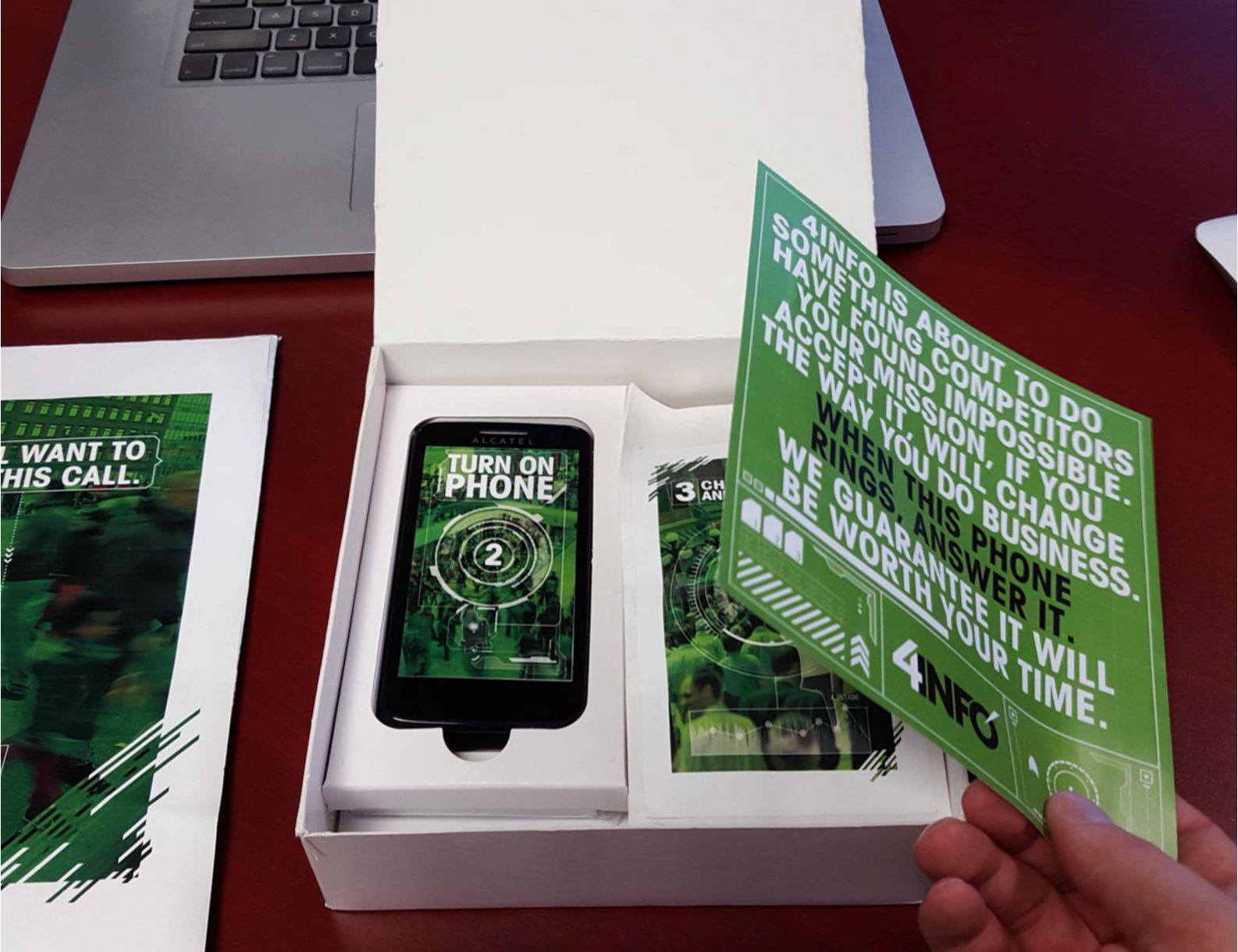
Dimensional mail is direct mail with shape: a box or object instead of an envelope. It gets opened because a package is a question. 4info mailed working phones to 274 buyers who had ghosted them and booked 77 meetings. Grasshopper FedExed 25,000 chocolate-covered grasshoppers to 5,000 people.
What is dimensional mail?
Dimensional mail is any physical mail with depth to it. A box, a tube, a padded envelope with an object inside. The industry also calls it lumpy mail, which is less elegant and more descriptive.
It sits inside direct mail as the format that actually performs in B2B. Flat mail competes with every other flat thing in the stack and loses. A box does not go in a stack. Someone has to decide what to do with it, and deciding requires opening it.
The mechanism is curiosity plus obligation. A package creates an unanswered question, and unanswered questions are uncomfortable. It also signals cost before it is opened, which is a proxy for seriousness. Nobody spends real money shipping a box to a name they pulled off a list without thinking.
Three tiers worth distinguishing:
- The object mailer. A relevant thing in a box. Costs tens of dollars, scales to hundreds of recipients.
- The custom build. Something made for one account or one person. Costs hundreds, scales to dozens.
- The stunt shipment. Volume plus strangeness, where the logistics are the story.
How to run dimensional mail without screwing it up
- Make the object argue the pitch. 4info sold mobile advertising, so it mailed working phones to 274 buyers who had gone dark, with a note reading "You'll want to take this call." 77 took the meeting, roughly $2M in pipeline and about 28x on spend.
- Weird beats expensive. Grasshopper FedExed 25,000 chocolate-covered grasshoppers to 5,000 leaders and journalists, five each, with a hangtag linking back. The strangeness did the work, not the unit cost.
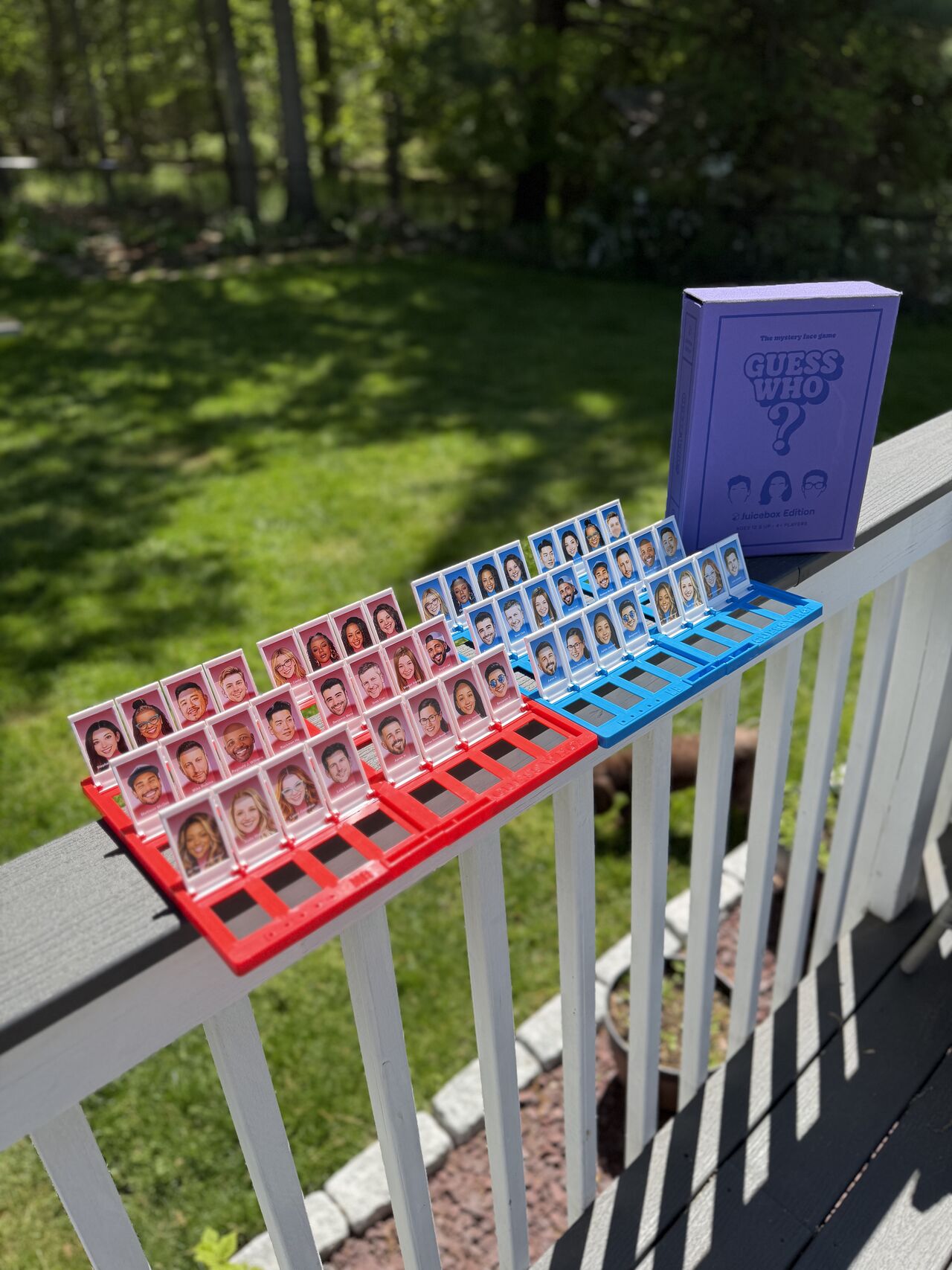
- Put the recipient inside the object. Juicebox reprinted Guess Who with the faces of top recruiting voices and mailed it to those same people, who posted it to their own audiences for free.
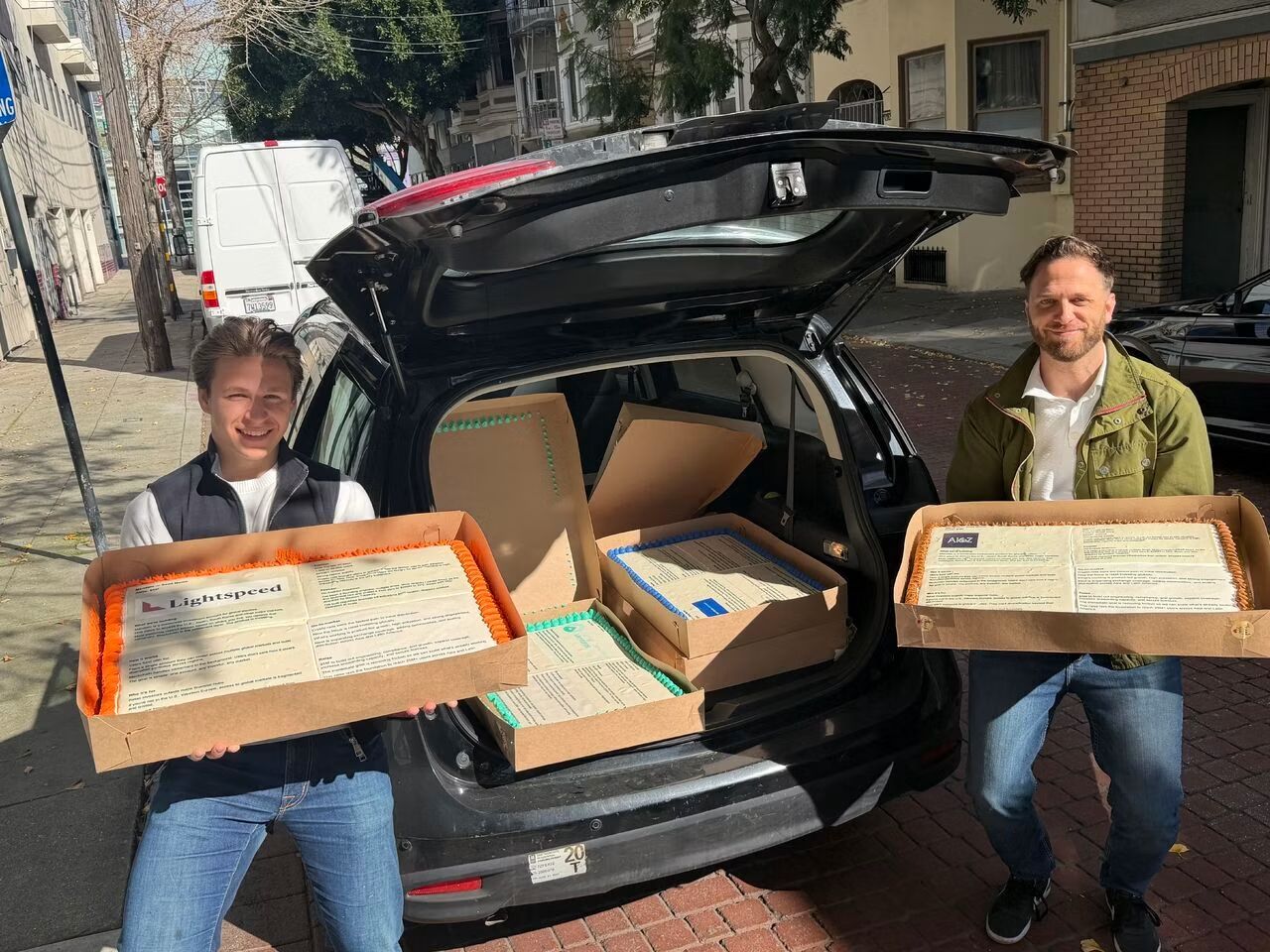
- Use perishability to force urgency. Daymaker hand-delivers custom cakes with the pitch printed on top, booking meetings on about 35% of campaigns. A cake cannot be filed for later.
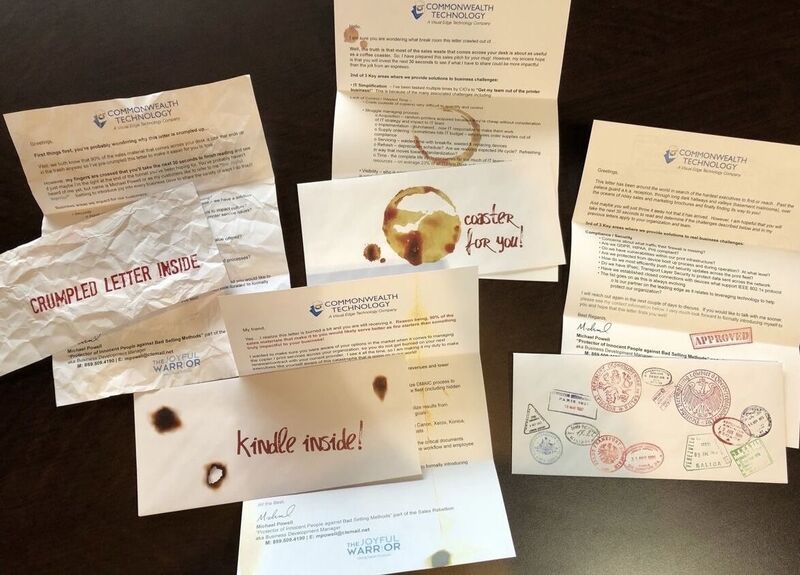
- Subvert the format itself. Dale Dupree's Rebel Letter arrives pre-crumpled, announcing what it is, which is why it survives next to polished mailers that all look identical.
- Verify the address, then plan the call. The two places dimensional mail budget dies are wrong addresses and no follow-up. Confirm someone sits there, and brief a rep to call inside the few days the package still means something.
When is dimensional mail a bad idea?
You cannot confirm where people sit. Hybrid and remote work broke most B2B office lists. Every wrong address is a total loss, not a partial one, because there is no cheap retry.
Your list is long. The economics only work at dozens to low hundreds. If you are shipping thousands of boxes, you are running consumer volume mechanics with B2B unit costs.
The recipient cannot accept it. Gift policies in government, healthcare, and finance can turn an expensive package into a problem for the person you were trying to help.
The object has nothing to do with you. A generic branded box is swag with postage. If the thing inside does not make an argument, the format is wasted.
You need it to land this month. Sourcing, production, and delivery take weeks. Dimensional mail is not a channel you can rush.
Examples of dimensional mail in the wild
Working phones to people who ghosted. 4info's mailer converted 274 silent accounts into 77 meetings, roughly 28x on spend, because the object was the argument.
25,000 chocolate-covered grasshoppers. Grasshopper's shipment went to 5,000 influential people, five each, sent like it was urgent.
A board game starring the recipients. Juicebox's custom Guess Who turned a mailer into organic reach when the people printed on the cards shared it themselves.
A cake with the pitch on top. Daymaker's play took the company from $10k to $130k in monthly revenue in about six weeks, with a same-day reply rate near 30%.
Mail that admits it is mail. The pre-crumpled Rebel Letter is technically flat and behaves dimensionally, because the crumple gives it shape and self-awareness.
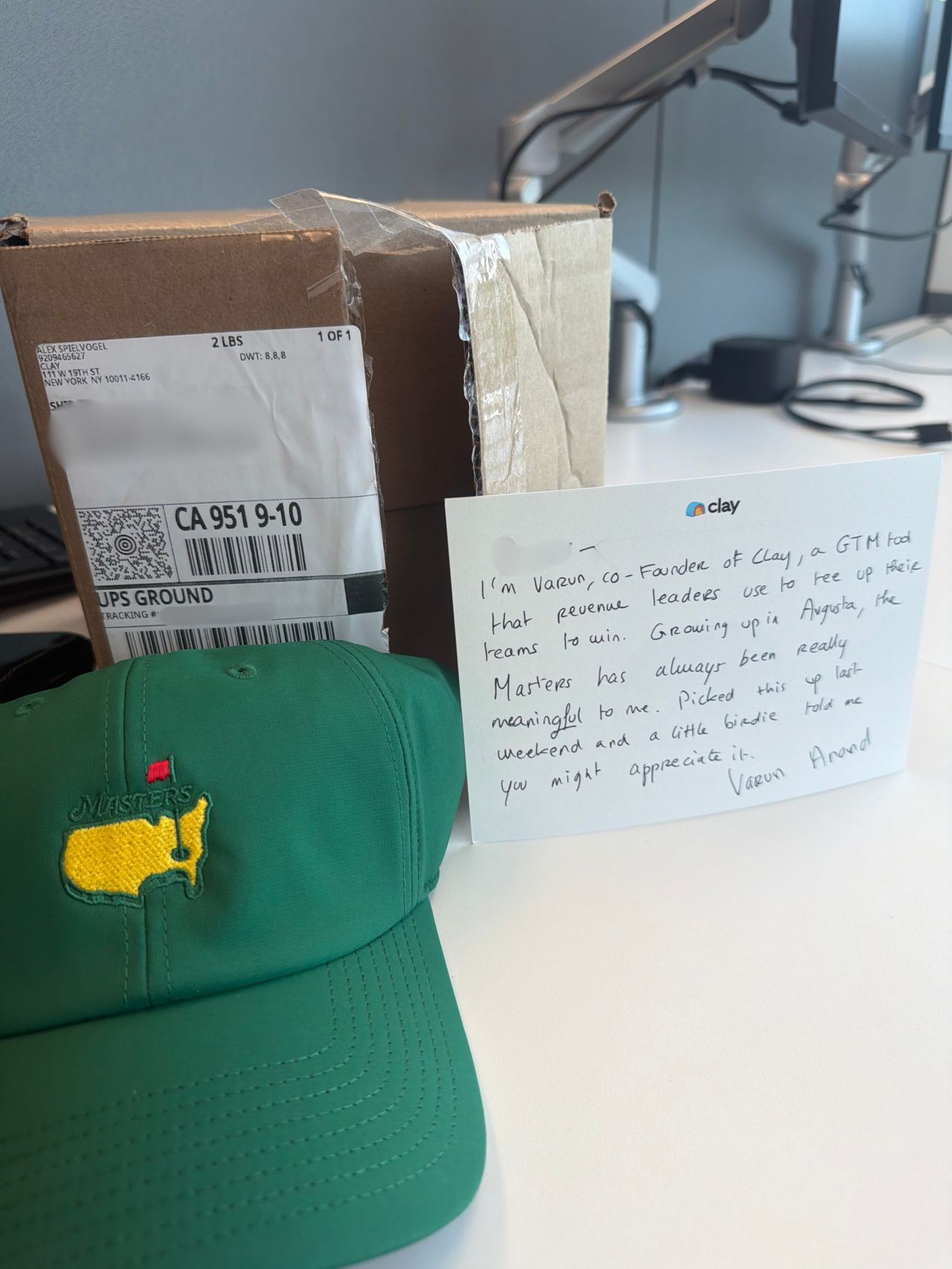
Sold-out merch to verified fans. Clay's Masters packages reached 110 of 114 targets and booked dozens of C-suite meetings for $5,280.
More mail-led plays are in the ABM examples roundup.
Sources
- uglyGTM play library, direct mail tag. 2026. https://www.uglygtm.com/t/direct-mail
Real plays that use Dimensional mail







FAQ
- What is dimensional mail?
- Dimensional mail is direct mail with physical depth, sent as a box, tube, or padded package containing an object rather than a flat envelope. The industry also calls it lumpy mail. It is the format that performs in B2B because a package has to be opened to be resolved.
- Why does dimensional mail work better than flat mail?
- A flat mailer joins a stack and competes with everything else in it. A box does not stack, so somebody has to decide what to do with it, and deciding means opening it. It also signals cost before opening, which reads as seriousness rather than volume.
- How much does dimensional mail cost?
- Object mailers typically run tens of dollars per unit and scale to hundreds of recipients. Custom builds for a single account run into the hundreds and scale to dozens. Add the research time that makes the object relevant, which is the part that actually determines results.
- What is the difference between dimensional mail and direct mail?
- Dimensional mail is a subset of direct mail. Direct mail covers anything sent to a physical address, including flat letters and postcards. Dimensional specifically means the piece has depth, containing an object rather than paper.
- How many people should receive a dimensional mail campaign?
- Dozens to low hundreds in most B2B cases. The economics depend on each recipient being researched enough that the object is relevant to them. Shipping thousands of identical boxes applies consumer volume logic to B2B unit costs and rarely returns.
Related terms
Account-based marketing
Account-based marketing is a B2B strategy that treats a defined list of high-value companies as individual markets, building outreach around the specific people inside them instead of chasing individual leads.
Outbound prospecting
Outbound prospecting is initiating contact with buyers who have not raised their hand, using email, calls, social, or physical touches to start a conversation the buyer did not ask for.
Go-to-market strategy
A go-to-market strategy is the plan for how a company reaches and sells to a specific set of buyers, covering who you target, how you position and price the product, and which motion you sell through.
Corporate gifting
Corporate gifting is sending a physical object to a prospect, customer, or influential person to open or advance a relationship, usually aimed at a named account rather than a broad list.
Direct mail
Direct mail is marketing sent through the postal system to a physical address, used in B2B to reach named accounts with something a buyer has to hold, open, and decide what to do with.