
Go-to-market strategy
Also called: GTM strategy, Go-to-market plan, Market entry strategy
A go-to-market strategy is the plan for how a company reaches and sells to a specific set of buyers, covering who you target, how you position and price the product, and which motion you sell through.
What is Go-to-market strategy?
A go-to-market strategy answers four questions with specifics attached: who exactly you sell to, what you say to them, what it costs, and how the sale actually happens. Channels are the last part, not the strategy. If your GTM plan does not name a buyer and a price, it is a marketing plan with a better title.
What is a go-to-market strategy?
A go-to-market strategy is how a company gets a product in front of the people who will pay for it, and how it converts them once they are there. It sits above marketing, sales, and pricing, and it is the thing all three are supposed to be executing.
Five components, and a strategy missing any of them is incomplete:
- The buyer. Not a market, a buyer. A defined ideal customer profile plus the buying group inside it, because in B2B the person who wants your product is rarely the person who signs.
- The message. What you claim, who you claim it against, and why anyone should believe it.
- The price. The number, the packaging, and the model. Pricing is a strategic decision that shapes which buyer you can reach at all, not an admin task for later.
- The motion. How the sale physically happens. Self-serve, sales-assisted, enterprise, partner-led.
- The channels. Where you show up. This is the part most people mistake for the whole thing.
Three motions cover most of B2B, and the choice between them determines nearly everything downstream:
- Product-led. People sign up, use a free tier, and expand on their own. Marketing feeds the top, and the product does the selling.
- Sales-led. A rep runs the deal end to end. Higher contract values, longer cycles, and the motion that outbound prospecting and account-based marketing exist to serve.
- Community or partner-led. Somebody else's audience or channel carries you, whether that is a marketplace, a reseller, or a group of practitioners who recommend you to each other.
Now the number everyone quotes. You will read that 95% of new products fail, usually attributed to Clayton Christensen. That figure is repeated far more often than it is sourced, and more careful work puts it much lower. A 2021 study in Marketing Letters found roughly 25% of new products fail in year one and about 40% by the end of year two, and Columbia Business School Publishing data puts two-year failure near 66% depending on how you define failure. The Product Development and Management Association, studying 651 companies across 37 countries, found the best performers launch successfully 76% of the time against 51% for everyone else.
Take whichever number you like. The useful part is the gap between the best performers and the rest, because that gap is what a real GTM strategy is for.
Which brings us to the honest problem. Most documents called a go-to-market strategy are a list of channels in a slide deck. LinkedIn ads, a webinar series, some SEO, a conference. That is a media plan. A real strategy names a buyer, makes a claim, sets a price, and picks a motion, and the channels fall out of those decisions rather than substituting for them.
How to build a GTM strategy without screwing it up
- Name the buyer before you name a single channel. Every downstream decision depends on this and almost nobody does it precisely enough. "Mid-market SaaS companies" is not a buyer. "VP Engineering at a 200 to 800 person company that just hired its first platform team" is a buyer, because you can go and find forty of them this afternoon.
- Pick one motion and commit to it for at least two quarters. Running product-led and enterprise sales simultaneously with one small team produces two half-motions. The most common failure in early GTM is hedging.
- Treat price as part of the strategy. Your price decides which buyer is reachable, how long the sales cycle runs, and whether you can afford a rep. Deciding it after the positioning is finished means the positioning was written for a company you cannot afford to be.
- Test the message somewhere cheap before you scale it. A message that survives a $3,500 test survives a $350,000 one. uglyGTM's wheatpasting run cost $3,500 all in and taught more about what the campaign should feel like than any brief would have.
- Build one thing people repeat. Distribution gets much cheaper when the idea travels on its own. Airlearn put foreign words that read as English swear words on New York billboards and passed 25 million views in ten days, because the placement became content rather than advertising.
- Give it long enough to read the result, and write down what would kill it. Most GTM strategies are abandoned before they could have worked or defended long after they clearly did not. Decide the kill criteria in advance, while you are still honest.
When is a GTM strategy a bad idea?
You have not found product-market fit. A GTM strategy is a plan to scale a motion that works. If nothing works yet, you are systematising a guess. Founders should be selling by hand until the pattern in the wins is obvious.
You are writing it for a board deck. A document produced to be presented rather than executed will optimise for looking comprehensive. It will contain every channel and commit to nothing.
You cannot name a buyer. If your wins have no pattern, the honest answer is that you have a research problem, not a strategy problem. Go and find the pattern first.
The team will not commit to one motion. A strategy nobody follows is a memo. If sales intends to keep chasing enterprise while the plan says self-serve, resolve that before you write anything down.
You need it to work this quarter. GTM strategies compound across quarters. If the requirement is pipeline in ninety days, buy demand, and treat the strategy work as a separate exercise on a separate timeline.
Examples of GTM strategy in the wild
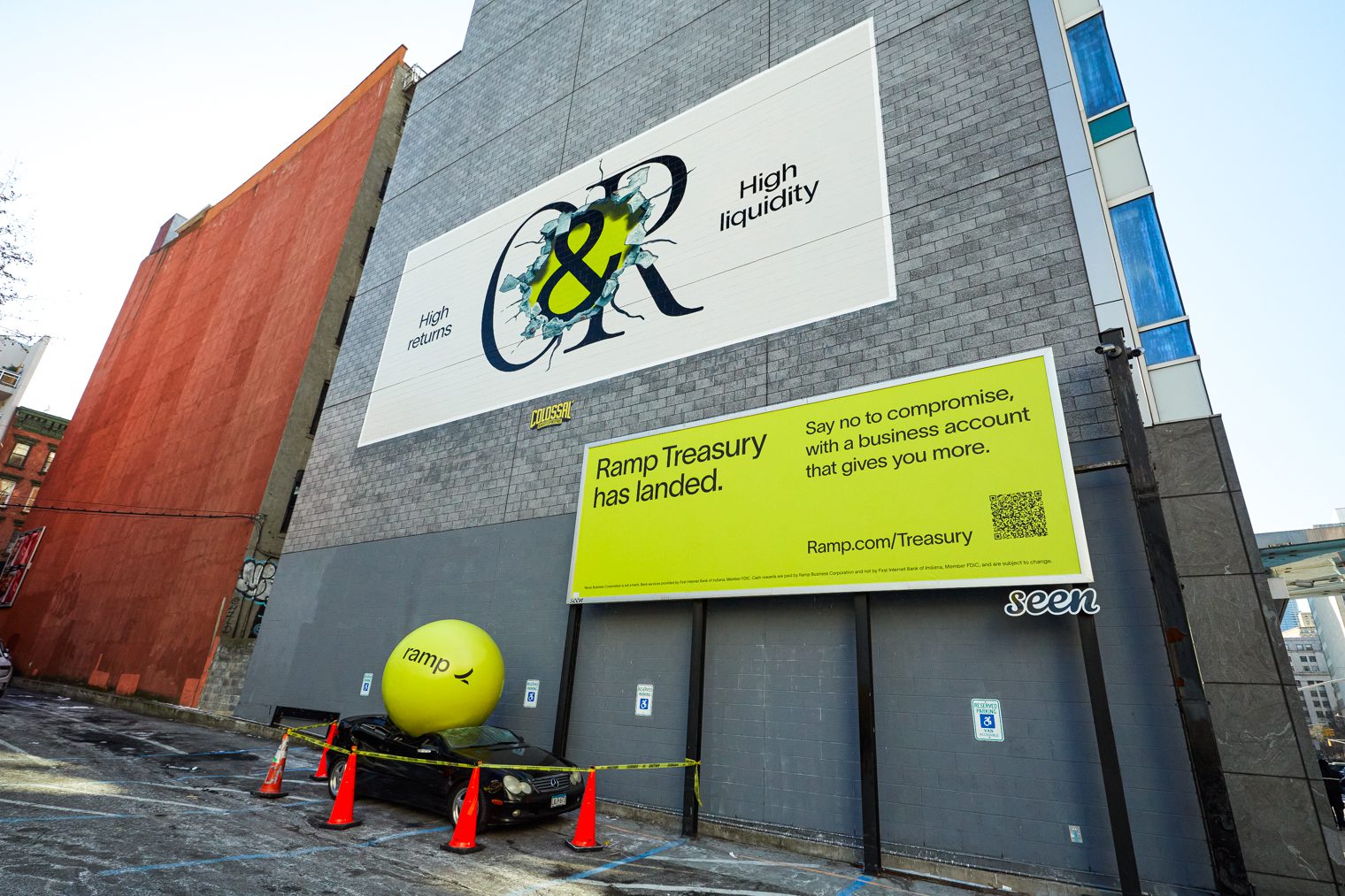
A launch built to be filmed. Ramp introduced a product with a wrecking ball and a smashed car rather than a plain billboard, and saw 73% higher click-through and 3x the views of its best previous launch. The strategic choice was to make the launch itself the media buy.
Owning the search that means buying intent. Zendesk invented a fictional band called Zendesk Alternative, which still ranks on page one years later. The strategy was to intercept people at the exact moment they went looking for a competitor.
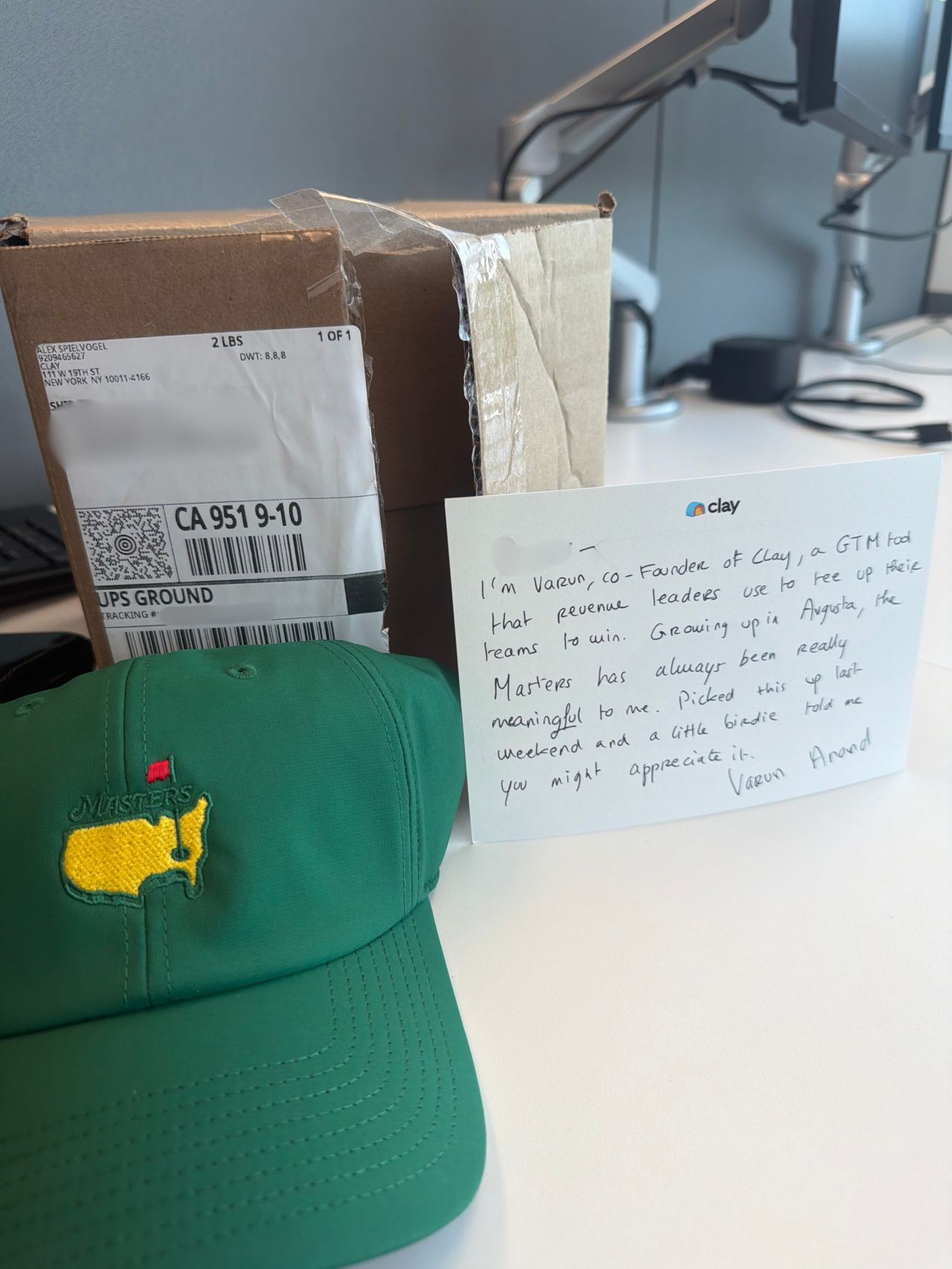
A short list, researched properly. Clay spent $5,280 sending sold-out Masters merchandise to 114 verified golf fans at Tier 1 accounts and booked dozens of C-suite meetings. Concentrating spend on a defined buyer is the whole ABM thesis in one campaign.
Distribution before budget. UserGems held up a cardboard sign reading "free beer" at Dreamforce and drew 578 attendees plus six figures of pipeline while every competitor ran a polished booth.
A price as the message. Cluely wrote a Times Square billboard like a text message, admitted it was expensive, and quadrupled site traffic overnight.
Full breakdowns with costs and results are in the OOH advertising examples roundup, the guerrilla marketing roundup, and the ABM examples roundup.
Sources
- Product Development and Management Association. "Comparative Performance Assessment Study," global best practices research across 651 companies in 37 countries. https://www.pdma.org/
- Marketing Letters. New product failure rate study. 2021. https://link.springer.com/journal/11002
- Columbia Business School Publishing, new product failure data. https://cup.columbia.edu/
- uglyGTM play library. 2026. https://www.uglygtm.com
Real plays that use Go-to-market strategy










FAQ
- What is a go-to-market strategy?
- A go-to-market strategy is the plan for how a company reaches and sells to a specific set of buyers. It covers five things: the buyer, the message, the price, the sales motion, and the channels. A plan that only covers channels is a media plan rather than a strategy.
- What is the difference between a go-to-market strategy and a marketing plan?
- A marketing plan is one component of a go-to-market strategy. GTM also covers pricing, the sales motion, and which buyer you are targeting in the first place. If your GTM document is a list of advertising channels, you have written a marketing plan and given it a bigger title.
- What are the main go-to-market motions?
- Three cover most of B2B. Product-led, where people sign up and expand on their own. Sales-led, where a rep runs the deal end to end. Community or partner-led, where somebody else's audience or channel carries you. The choice determines nearly every downstream decision.
- How long does a go-to-market strategy take to work?
- Longer than a quarter. Most motions need at least two quarters before the results mean anything, and brand-led approaches take longer still. The common failures are abandoning a strategy before it could have worked and defending one long after it clearly did not.
- Why do most go-to-market strategies fail?
- Usually because they are channel lists rather than strategies. They name no specific buyer, avoid committing to one motion, treat price as an afterthought, and set no criteria for what would count as failure. Research on 651 companies found the best performers launch successfully 76% of the time against 51% for everyone else, and that gap is mostly discipline.
Related terms
Account-based marketing
Account-based marketing is a B2B strategy that treats a defined list of high-value companies as individual markets, building outreach around the specific people inside them instead of chasing individual leads.
Brand awareness
Brand awareness is the extent to which buyers recognize and recall a brand when a relevant need arises, which determines whether it makes the shortlist before evaluation begins.
Ideal customer profile
An ideal customer profile is a description of the company types that get the most value from your product and are the cheapest for you to win, keep, and grow.
Demand generation
Demand generation is the marketing discipline of creating awareness and interest in a category across an entire market, then capturing that interest when buyers are ready to act.