
GTM engineer
Also called: Growth engineer, RevOps engineer, GTM systems
A GTM engineer is a technical go-to-market operator who builds automated systems for finding, enriching, and reaching buyers, sitting between marketing, sales, and engineering.
What is GTM engineer?
A GTM engineer builds the plumbing behind modern go-to-market: enrichment, scraping, scoring, and automated outreach that used to take a team of SDRs. The role exists because tooling got good enough that one technical operator can now do what a department did, and do it with better targeting.
What is a GTM engineer?
A GTM engineer is the person who builds go-to-market systems rather than running plays by hand. They live in Clay, n8n, Zapier, the CRM, and increasingly a code editor, and their output is infrastructure: a pipeline that finds accounts matching a pattern, enriches them, scores them, and triggers the right action without anyone opening a spreadsheet.
The role is genuinely new, and it exists for two reasons. Data enrichment and workflow tooling got cheap and composable, and volume outbound stopped working at the same time. That combination created demand for someone who can build precision at scale instead of buying more seats.
What they actually do, roughly in order of how often it comes up:
- Data plumbing. Pulling account and contact data from multiple sources, deduping it, enriching it, and keeping it fresh.
- Signal capture. Turning observable events into triggers. A hiring post, a funding round, a tech stack change, a product usage threshold.
- Scoring and routing. Deciding which accounts matter this week and getting them in front of the right person.
- Automation with taste. Building sequences and campaigns that stay specific enough to feel human, which is the hard part.
The honest thing to say about this title is that a lot of people wearing it are doing sophisticated spam. The tooling makes it trivially easy to send 10,000 personalized-looking emails, and doing that faster is not engineering, it is just a bigger version of the thing that already stopped working. The GTM engineers worth hiring use the same tooling to send far fewer, far better-targeted touches.
How to work as a GTM engineer without screwing it up
- Build the list before you build the automation. The system is only as good as the definition of who you are targeting. Start from a real ideal customer profile with a pattern in the closed-won data, not from whatever the enrichment vendor can return.
- Use signals to shorten the list, not lengthen it. Intent data and observable triggers should cut a list of 5,000 to 80. Teams that use signals to justify contacting more people have the mechanism backwards.
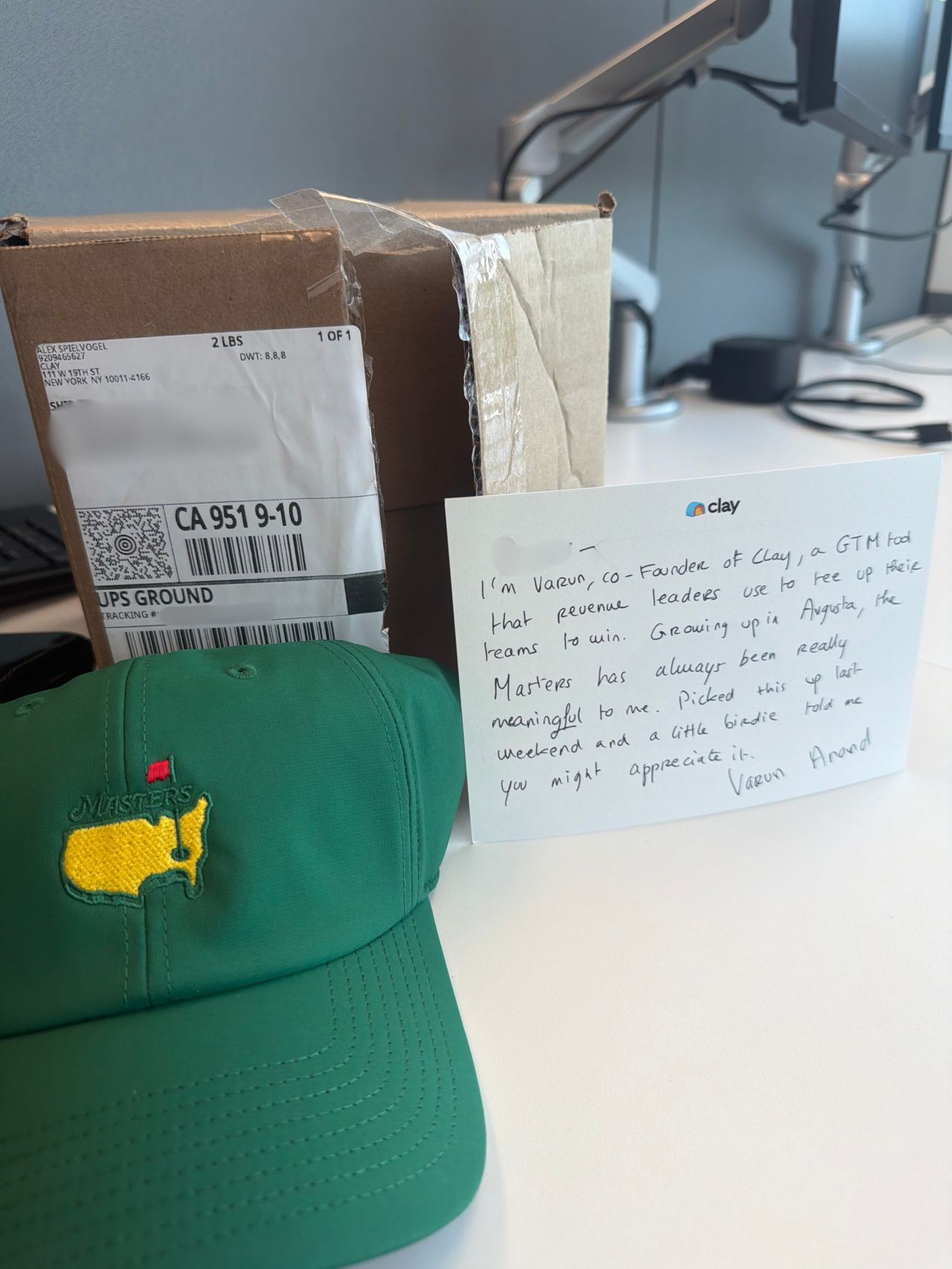
- Let the research fund a real touch. Clay used buying signals to find the genuine golf fans at Tier 1 accounts before spending anything, then sent 114 packages of sold-out Masters swag for $5,280 total with handwritten notes. The automation found the people. A human sent the thing.
- Instrument everything you build. If you cannot see which step of a workflow is failing, you have built a black box that will quietly degrade for months.
- Keep a human in the last mile. The highest-performing plays in this category all end with something a machine did not do. A note, a call, a physical object.
- Remember deliverability is a shared resource. Burning a domain with volume does not just hurt this campaign, it hurts every future one. Treat sending reputation as infrastructure you are responsible for.
When do you not need a GTM engineer?
You have not found product-market fit. Automating a motion that does not work yet produces a faster way to be wrong. Founders should be selling manually until the pattern is obvious.
Your total addressable market is small. With a few hundred possible customers, a spreadsheet and a rep are more efficient than a pipeline. Build systems when the manual version genuinely does not scale.
Nobody owns the data quality. Enrichment and automation multiply whatever is in the CRM, including the garbage. If the underlying records are unreliable, the first hire is someone to fix that.
You are hiring one to send more email. If the brief is "increase outbound volume," you do not need an engineer, and the outcome will be worse deliverability and a burned domain.
Your sales team will not use it. These systems fail on adoption more than on technology. If reps do not trust the scoring, they will ignore the queue and work their own list.
Examples of GTM engineering in the wild
Signal-led gifting at Clay. The Masters swag play is the clearest example of the discipline. Signals identified real golf fans at target accounts, which turned an expensive gift into a $46 per head spend returning roughly 40x.
Verified passion before spend. A supercar track day was built on a buyer's motorsport interest confirmed across two independent sources before anyone booked anything. That verification step is the engineering.
Reactivating dead accounts with one trigger. 4info mailed working phones to 274 buyers defined by a single clean signal, six months of silence, and booked 77 meetings.
One fact, one person, one object. GumGum built a custom comic around a single verified detail about one decision maker. The research is the work, and it is the part automation should be serving.
Sources
- uglyGTM play library. 2026. https://www.uglygtm.com
Real plays that use GTM engineer






FAQ
- What is a GTM engineer?
- A GTM engineer is a technical go-to-market operator who builds automated systems for finding, enriching, scoring, and reaching buyers. They sit between marketing, sales, and engineering, and their output is infrastructure rather than individual campaigns.
- What tools do GTM engineers use?
- Typically an enrichment and workflow layer such as Clay, an automation tool like n8n or Zapier, the CRM, a sending platform, and increasingly direct API work or scripting. The specific stack matters less than the ability to compose data sources into a reliable pipeline.
- Is a GTM engineer the same as a sales ops or RevOps person?
- They overlap but differ in emphasis. RevOps generally owns process, reporting, and systems of record. A GTM engineer builds the acquisition machinery itself, particularly data enrichment, signal capture, and automated outreach, and is usually more hands-on technically.
- When should a company hire a GTM engineer?
- After product-market fit, once a manual motion is proven and the bottleneck is genuinely scale rather than message. Hiring one before that automates a motion that does not work yet, which produces a faster way to be wrong.
- Does GTM engineering just mean more automated spam?
- It often does in practice, and that is the failure mode. The tooling makes it trivial to send thousands of personalized-looking emails. The version that works uses the same systems to cut a list from thousands to dozens, then funds a genuinely human touch for each one.
Related terms
Account-based marketing
Account-based marketing is a B2B strategy that treats a defined list of high-value companies as individual markets, building outreach around the specific people inside them instead of chasing individual leads.
Intent data
Intent data is behavioral signal indicating that a company or person is actively researching a product category, used to prioritize which accounts to contact and when.
Ideal customer profile
An ideal customer profile is a description of the company types that get the most value from your product and are the cheapest for you to win, keep, and grow.
Outbound prospecting
Outbound prospecting is initiating contact with buyers who have not raised their hand, using email, calls, social, or physical touches to start a conversation the buyer did not ask for.
Go-to-market strategy
A go-to-market strategy is the plan for how a company reaches and sells to a specific set of buyers, covering who you target, how you position and price the product, and which motion you sell through.