
Intent data
Also called: Buyer intent data, Purchase intent signals, Surge data
Intent data is behavioral signal indicating that a company or person is actively researching a product category, used to prioritize which accounts to contact and when.
What is Intent data?
Intent data is behavioral signal suggesting a company is researching your category. It tells you about timing, not fit, and it works at the account level. So you learn that someone at Acme read three articles about your category. You do not learn whether it was an intern writing a paper.
What is intent data?
Intent data is the attempt to answer one question: which of these companies is thinking about buying something like ours right now?
It works by watching behavior. Somebody at a company reads three articles about your category, compares two vendors on a review site, downloads a report, searches a set of related terms. When that activity crosses meaningfully above the company's own baseline, a platform flags it as a surge and hands you an account name.
There are three flavors, and confusing them is where most of the disappointment comes from:
- First-party. Behavior on properties you own. Site visits, pricing page views, docs, demo requests. Extremely accurate, because you observed it directly. Limited reach, because it only sees people who already found you.
- Second-party. A partner's first-party data shared with you, usually a review site telling you someone compared you against a competitor. Narrow but often the highest-quality signal you can buy.
- Third-party. Research activity aggregated across publisher networks. The broadest view, covering people who have never heard of you. Also the noisiest, and the source of nearly every complaint about intent data.
Now the part vendors put in a footnote. Intent data measures attention, not readiness. Someone reading about your category might be a buyer. They might also be a consultant writing a deck, a competitor doing research, a student, a journalist, or an employee who is mildly curious on a slow afternoon. One independent benchmark put surge signal accuracy at roughly 81%, which means about one in five accounts on your hot list has nothing happening in it at all.
The second limitation is resolution. Most third-party intent resolves to the company, not the human. You learn Acme is researching CRM. Acme has 500 employees. Intent data has narrowed your problem from 200,000 companies to one company and 500 people, which is genuine progress and also not an answer.
So the honest framing: intent tells you when, your ICP tells you who, and research tells you what to say. Teams that treat an intent feed as a lead list skip two of those three and then decide the data was bad.
How to use intent data without screwing it up
- Turn on first-party before you buy third-party. Website visitor identification on your own pricing and docs pages usually pays for itself before you spend a dollar on a surge feed, and the signal is real rather than inferred. Most teams do this in the wrong order because the third-party pitch is more exciting.
- Require two signals, not one. A single keyword spike is noise. A keyword spike plus a pricing page visit plus a funding round plus a new VP in the relevant seat is a story. Build a composite score that needs multiple independent signals before anything gets flagged, and your false positive rate drops sharply.
- Act in days or do not bother. Signals decay fast. If intent lands in a dashboard on Monday, gets reviewed Thursday, and reaches a rep the following week, you have paid for timing data and then thrown the timing away. The workflow matters more than the vendor.
- Multi-thread, because you do not know who it was. Account-level signal means the correct response is reaching three to five people across different functions with role-specific messaging, then watching who engages. That is your actual answer to who was researching.
- Budget the human, not just the tool. A $30k platform that requires an analyst to operationalize is a $150k platform. If nobody owns the workflow, you have bought a very expensive way to feel informed.
- Use intent for prioritization, never for qualification. Intent says look here first. It does not say this account is a fit, has budget, or wants to talk. Treating a surge as a qualification event is how reps end up opening with "I saw you were researching solutions like ours," which reads as surveillance and converts accordingly.
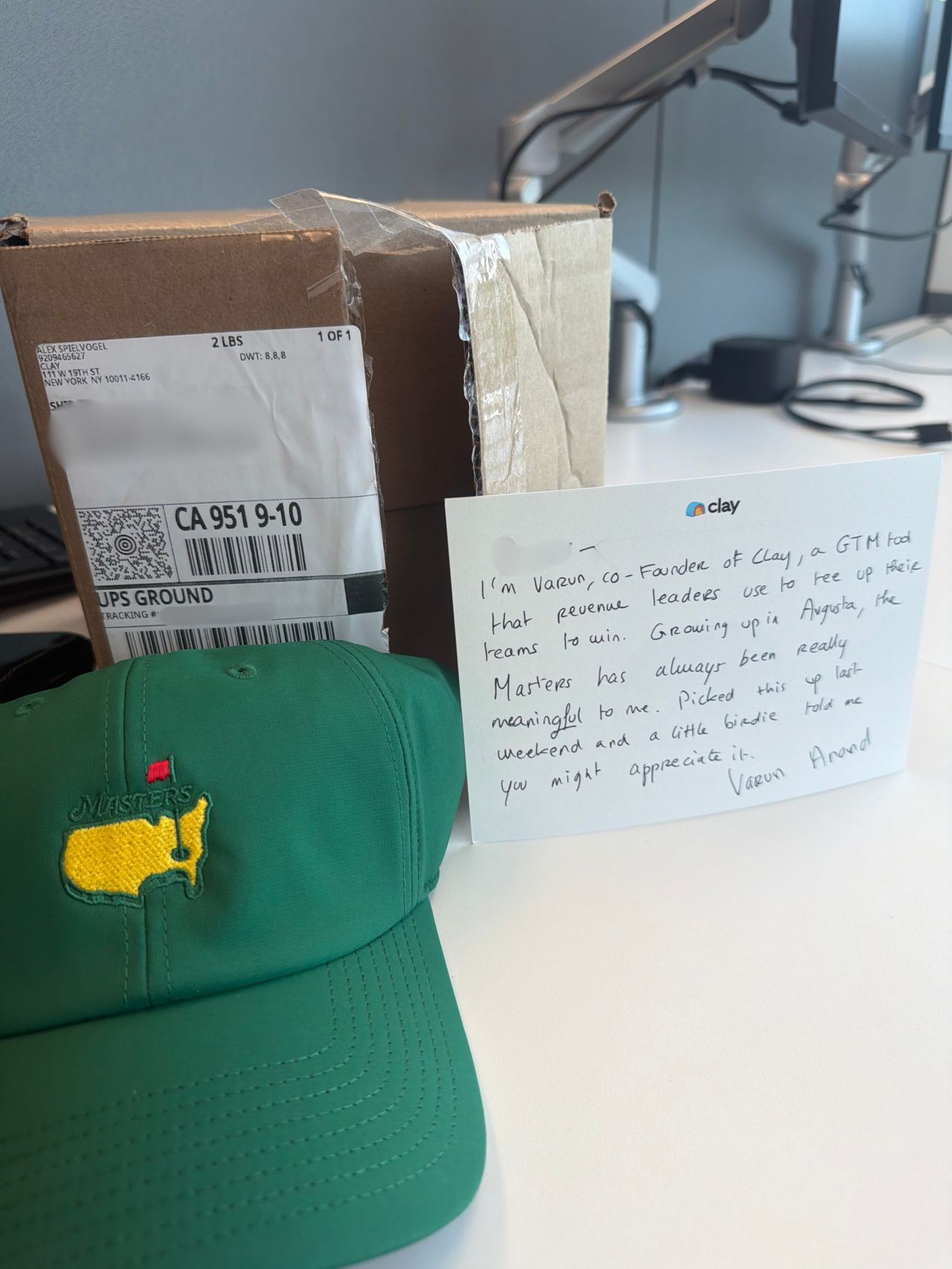
- Layer real research on top before you spend money. This is where intent earns its keep in ABM. Clay used signals to find the genuine golf fans inside Tier 1 accounts before sending $5,280 of sold-out Masters swag, which returned roughly 40x. The signal narrowed the list. A human being decided what to send.
When is intent data a bad idea?
Your total market is small enough to work exhaustively. If you have 300 target accounts and a team that can cover them, prioritization software solves a problem you do not have. Work all of them and spend the budget on the outreach instead.
You do not have an ICP yet. Intent without fit produces a list of companies researching your category that you have no business selling to. You will chase them anyway, because the dashboard says they are hot. Build the ideal customer profile first.
Nobody can act within a week. Intent data is perishable. If your team is capacity-constrained and signals sit in a queue, you are paying a subscription for information that expires before use.
Your plan is to treat it as a lead list. The failure pattern is predictable: import the surge accounts, blast a sequence referencing their research, get a wave of unsubscribes and a few offended replies, conclude intent data is snake oil. The data was fine. The application was creepy.
You want it to replace demand creation. Intent finds the roughly 5% of buyers already in-market. It does nothing for the 95% who are not, and if you are only ever harvesting existing intent, someone else built the awareness that created it. See demand generation for that half of the problem.
Examples of intent data in the wild
Signal to gift. Clay used buying signals to identify actual golf enthusiasts at Tier 1 accounts, then spent $5,280 sending 114 packages of sold-out Masters merch with handwritten notes. Dozens of C-suite meetings, roughly 40x on pipeline. Intent got them to the right accounts. A person got them to the right idea.
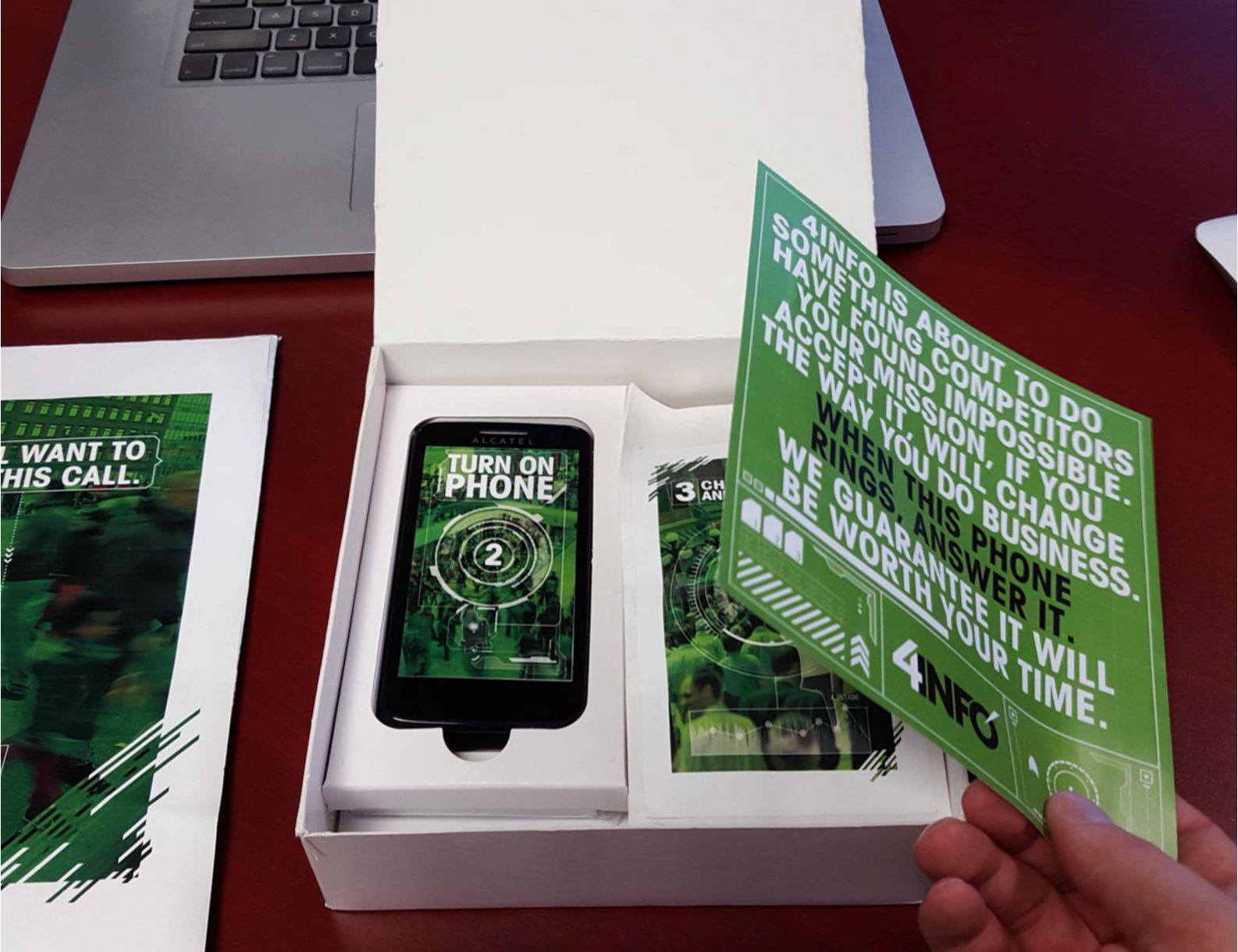
Silence as a signal. 4info took 274 senior agency buyers who had gone dark for six months and treated the ghosting itself as the data. Working phones in the mail, a note reading "You'll want to take this call," 77 meetings, about $2M in pipeline. Not every useful signal comes from a platform.
Verified twice before spending. A team running a supercar track day confirmed a target buyer's motorsport passion across two independent sources before booking anything, specifically to avoid acting on someone who once liked a car post. That is the composite-signal principle applied by hand, and it cost about $500 to get the meeting.
Physical intent. Conference attendance is one of the strongest signals in B2B and nobody sells it as a feed. Your buyers registered, paid, and flew somewhere to think about your category for four days. Pairing that list with out-of-home advertising around the venue reaches a concentration of in-market buyers no platform can match.
Sources
- "B2B Intent Data: How It Works and Where Teams Go Wrong." 2026. https://www.emailaddress.ai/blog/b2b-intent-data-guide
- TechRepublic. "B2B Intent Data: What It Is and How to Evaluate It." 2026. https://www.techrepublic.com/article/b2b-intent-data/
- MarTech. "The false allure of B2B intent data." 2024. https://martech.org/the-false-allure-of-b2b-intent-data/
- uglyGTM. "8 Unconventional Account Based Marketing Real Examples." 2026. https://www.uglygtm.com/blog/account-based-marketing-examples
Real plays that use Intent data



FAQ
- What is the difference between first-party, second-party, and third-party intent data?
- First-party is behavior on your own properties: site visits, pricing page views, docs. Accurate, but only covers people who already found you. Third-party is research activity across publisher networks, which is broader and noisier. Second-party is a partner's first-party data shared with you, usually from a review site.
- How accurate is intent data?
- Less than vendors imply. One independent benchmark put surge signal accuracy around 81%, meaning roughly one in five flagged accounts has no real buying process. Accuracy varies by provider, and consent-based cooperative sources generally beat bidstream-derived ones.
- Can intent data tell you who at a company is researching?
- Usually no. Most third-party intent resolves to the account, not the person. You learn Acme is looking at your category. You do not learn which of their 500 employees, which is why intent has to be paired with multi-threaded outreach rather than a single contact.
- How quickly does intent data decay?
- Fast. A signal from three weeks ago is meaningfully worse than one from yesterday, because buying windows are short and competitors are working the same list. If your process routes signals weekly and reps act the following week, you are arriving late by design.
- Is intent data worth the money?
- It depends on whether you can act on it within days. A tool that costs $30k a year and needs an analyst to operationalize is really a $150k tool. If nobody owns the workflow, you are buying a dashboard that makes everyone feel informed and changes nothing.
Related terms
Account-based marketing
Account-based marketing is a B2B strategy that treats a defined list of high-value companies as individual markets, building outreach around the specific people inside them instead of chasing individual leads.
Ideal customer profile
An ideal customer profile is a description of the company types that get the most value from your product and are the cheapest for you to win, keep, and grow.
Demand generation
Demand generation is the marketing discipline of creating awareness and interest in a category across an entire market, then capturing that interest when buyers are ready to act.
Go-to-market strategy
A go-to-market strategy is the plan for how a company reaches and sells to a specific set of buyers, covering who you target, how you position and price the product, and which motion you sell through.